A plastic bag takes 20 years to decompose. A plastic bottle takes 450 years. A plastic straw takes 200 years. The plastic produced in the last decade alone will outlive every person alive today — and the generation after them, and the one after that.
India generates approximately 9.46 million tonnes of plastic waste every year. Less than 60% is collected. The rest enters rivers, soil, oceans, and the food chain. We are, quite literally, eating the plastic we threw away.
Prakritii Foundation's Plastic Waste Management Drive exists because this crisis will not be solved by awareness alone — it requires action, community systems, and the willingness to get our hands dirty.
The Scale of India's Plastic Crisis
These numbers are not abstract. They show up in the rivers choked with plastic bottles, the farmland laced with microplastics, the cows and cattle eating plastic bags from open garbage dumps, and the fish carrying plastic in their bodies. The plastic crisis is an ecological emergency — and it is happening right now, in every district of India.
What Prakritii Foundation Does
Our plastic waste management program operates on three levels: collect, divert, and educate.
Community Plastic Collection Drives
Organising volunteers to collect plastic waste from public spaces, riverbanks, parks, and community areas — removing plastic that has already entered the environment before it reaches water bodies.
Plastic Segregation at Source
Working with households and institutions to separate plastic waste at the point of generation — making it easier to channel into recycling streams rather than general waste dumps.
Linkage to Recyclers
Connecting collected, segregated plastic to registered recyclers and waste processors — ensuring the material enters a formal circular economy rather than being burned or landfilled.
Plastic Awareness Campaigns
School and community sessions that go beyond "plastic is bad" to give people specific, actionable alternatives — reusable bags, refill systems, bulk buying, and plastic-free swaps for daily use items.
Single-Use Plastic Reduction
Partnering with local vendors, markets, and events to reduce single-use plastic at the point of distribution — addressing the problem at the source, not just downstream.
"Recycling is important. But the most powerful thing you can do is refuse plastic before it enters your hands." — Prakritii Foundation
The Problem with Recycling Alone
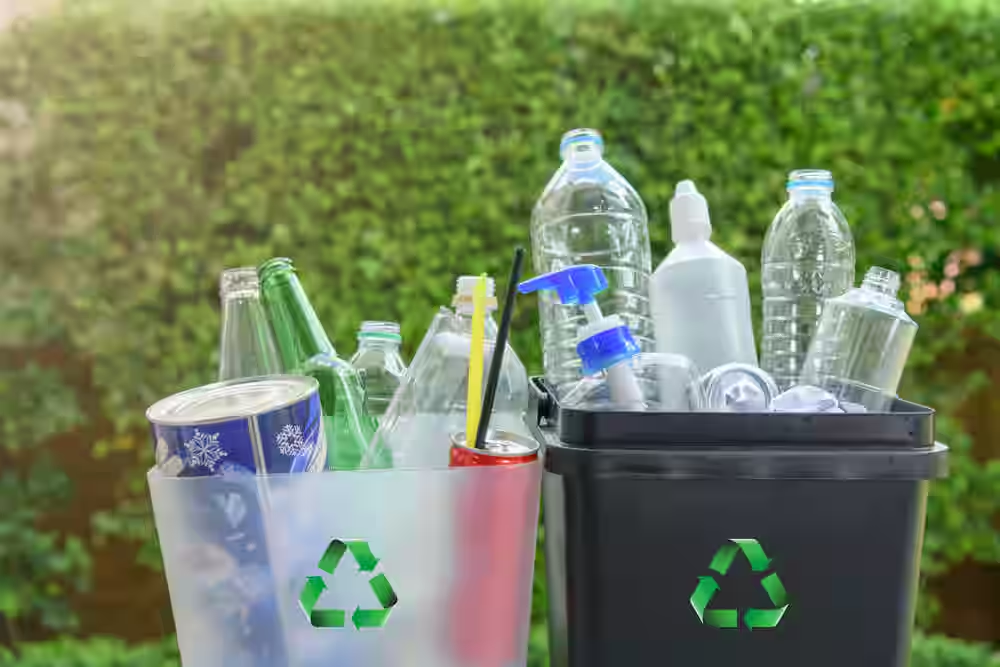
Recycling is necessary, but it is not sufficient. Less than 9% of all plastic ever produced has been recycled. Much of what goes into recycling bins is not actually recycled — it is downcycled into lower-quality materials, or shipped overseas, or quietly landfilled when recycling economics don't work out.
The real solution to the plastic crisis is a three-level hierarchy that Prakritii Foundation follows in all its work:
- Refuse — don't take the plastic in the first place. Say no to single-use. Carry your own bag, bottle, container.
- Reduce — when you can't refuse, minimise. Buy in bulk. Choose products with less packaging. Repair instead of replace.
- Recycle — when you can't refuse or reduce, ensure what you use goes back into a proper waste stream.
What Grassroots Action Can Actually Do
The plastic crisis can feel overwhelming — too large for any individual or small organisation to make a dent in. But that framing is wrong. Grassroots action does four things that policy and industry alone cannot:
- It removes plastic that has already entered the environment — rivers, beaches, roadsides — which no regulation can retroactively clean up
- It changes community behaviour through peer influence — people respond to neighbours, not advertisements
- It builds local capacity for ongoing waste management — not a one-time clean-up but a sustained system
- It creates data and visibility that informs policy — what communities collect and report becomes evidence for action
SDG alignment:
What You Can Do Today
You do not need to wait for perfect recycling infrastructure or a national plastic ban to act. Start with your own household. Audit your weekly plastic waste. Replace the five highest-volume items with reusable alternatives. Join a local collection drive. Support organisations doing this work on the ground.
And if you're a company looking for a plastic waste management CSR program that delivers measurable, documented environmental impact — Prakritii Foundation can design and deliver it.
Join the Fight Against Plastic Pollution
Fund collection drives, awareness campaigns, and plastic waste processing in communities across India.