India generates over 62 million tonnes of solid waste every year. Nearly 50% of that is organic — kitchen scraps, agricultural residue, food waste, garden trimmings. And the vast majority of it ends up in open dumpsites, landfills, or being burned — releasing methane, polluting groundwater, and destroying the soil ecology that communities depend on.
Prakritii Foundation refuses to accept this as inevitable. Our Organic Waste Management program is built on a simple but transformative idea: waste is not a problem to be disposed of — it is a resource waiting to be used.
What is Organic Waste Management?
Organic waste management is the process of separating, collecting, and processing biodegradable waste — food scraps, plant matter, agricultural by-products — and converting it into something useful rather than letting it rot in a landfill.
When organic waste decomposes in a landfill without oxygen, it produces methane — a greenhouse gas 25 times more potent than CO₂. When it is composted or processed into biogas with the right methods, it becomes a resource that enriches soil, generates energy, and reduces the need for chemical fertilisers.
The difference between these two outcomes is not technology. It is knowledge, behaviour, and community systems.
"Every vegetable peel thrown into a landfill is a missed opportunity. Every one composted is a small act of ecological repair." — Prakritii Foundation
What Prakritii Foundation Does
Our organic waste management program works at the community level — with households, schools, and local institutions — to build practical, sustainable waste processing habits that don't require expensive infrastructure or technology.
Key interventions:
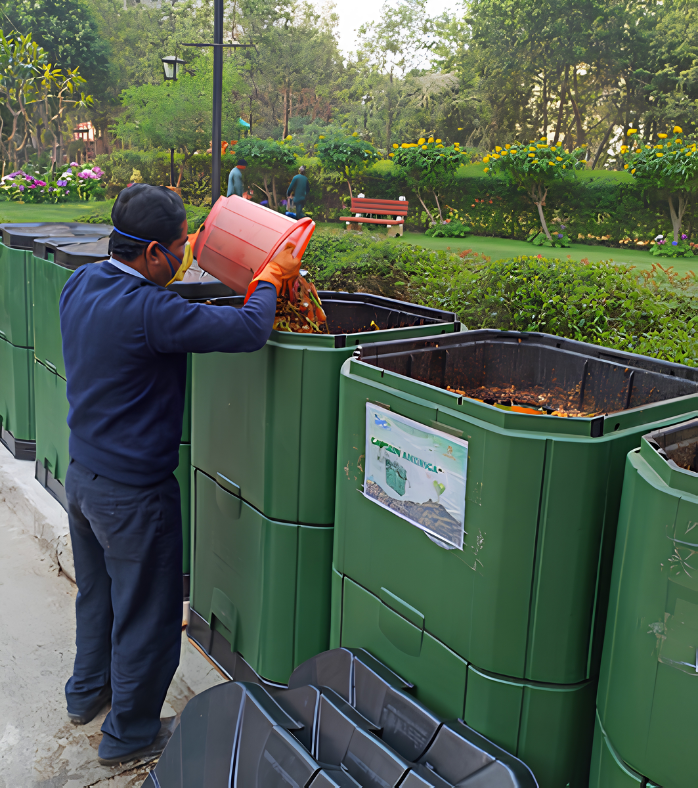
- Community composting units — setting up shared composting facilities in residential areas and schools, turning food waste into fertiliser for local gardens and farms
- Home composting training — teaching families how to compost kitchen waste in simple bins, reducing the amount of waste they send to landfill to near zero
- Waste segregation drives — awareness campaigns to separate organic from inorganic waste at the source, the single most important step in waste management
- Agricultural waste processing — working with farming communities to convert crop residue into compost instead of burning it — reducing air pollution and improving soil health simultaneously
- Biogas demonstration — introducing small-scale biogas systems that convert organic waste into cooking fuel, reducing dependence on LPG and cutting household emissions
The Numbers Behind the Problem
Why This Matters for Climate
Landfill methane from organic waste is one of India's most significant — and most overlooked — sources of greenhouse gas emissions. Every tonne of organic waste diverted from landfill prevents approximately 0.5 tonnes of CO₂-equivalent emissions. At scale, community composting is not just a hygiene intervention. It is a climate intervention.
At the same time, composting reduces the need for synthetic fertilisers — which are themselves energy-intensive to produce and damaging to soil biology when overused. Healthy soil absorbs more carbon. Healthy soil grows more food. The virtuous cycle runs deep.
The Community Impact
Beyond the environmental numbers, what our organic waste management program does to communities is profound. It gives people ownership over their local environment. It creates local jobs — waste collectors, compost managers, biogas operators. It reduces municipal waste loads, improving sanitation. And it produces a valuable output — compost — that farmers can use to grow better food.
This is circular economy in its most human form: a community closing its own resource loops, reducing its own waste, and benefiting from doing so. No external dependency. No expensive imports. Just smarter use of what's already there.
SDG alignment:
What You Can Do
You don't need to wait for a government policy or a municipal infrastructure upgrade to start managing organic waste better. The most powerful changes begin at home — with a compost bin, a segregation habit, and the willingness to see waste differently.
If you're a school, an RWA, a company, or a local government body interested in setting up an organic waste management system in your community — Prakritii Foundation can help design, implement, and train.
Help Us Scale Organic Waste Management
Your support funds community composting units, training sessions, and waste awareness drives across India.